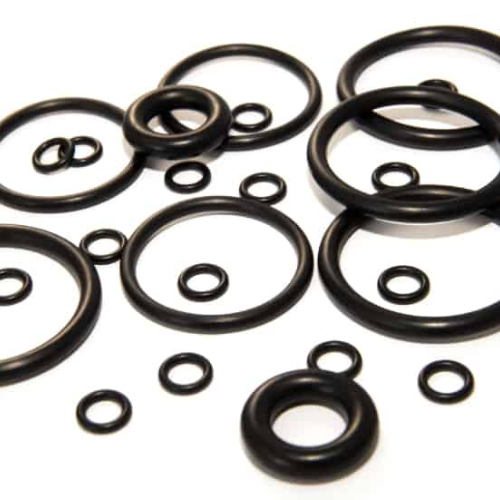
A Nitrile Rubber O-Ring is a versatile sealing component made from nitrile butadiene rubber (NBR), which is specifically designed for sealing and preventing leakage in various mechanical systems. O-rings are used to create a tight seal between two parts, preventing the ingress of dirt, moisture, or other contaminants while also retaining oils and lubricants. They are essential in a wide range of industrial, automotive, and fluid power applications due to their excellent sealing performance.
\r\n\r\n
Key Features of Nitrile Rubber O-Rings:
\r\n\r\n
\r\n - Oil and Fuel Resistance: Nitrile rubber O-rings are highly resistant to oils, fuels, and other petroleum-based fluids. This makes them ideal for automotive, hydraulic, and industrial applications where exposure to such substances is common.
\r\n - Durability: NBR is known for its robustness and durability, offering good resistance to abrasion, wear, and tear under normal operating conditions.
\r\n - Wide Temperature Range: Nitrile rubber O-rings can function in a broad range of temperatures, typically from -40°C to +100°C (-40°F to +212°F), making them suitable for many environments and industries.
\r\n - Compression Set Resistance: These O-rings are designed to resist compression set, meaning they maintain their shape and sealing properties even after prolonged exposure to pressure, which ensures long-term sealing effectiveness.
\r\n - Cost-Effective: Nitrile rubber is relatively inexpensive compared to other sealing materials, making it a cost-effective choice for many applications without compromising performance.
\r\n
\r\n\r\n
Applications of Nitrile Rubber O-Rings:
\r\n\r\n
\r\n - Automotive Industry: Used in fuel systems, engine seals, brake systems, and air conditioning systems to prevent leakage of oil, fuel, and refrigerants, ensuring efficient and safe operation.
\r\n - Hydraulic and Pneumatic Systems: Essential in hydraulic cylinders, pumps, and valves to maintain pressure integrity and prevent leaks in fluid power systems.
\r\n - Industrial Machinery: Employed in pumps, compressors, and machinery where sealing of fluids, gases, or lubricants is required to prevent contamination and maintain efficiency.
\r\n - Food and Beverage Industry: When certified for food-grade use, nitrile rubber O-rings are used in food processing and packaging equipment to maintain sanitary conditions and prevent contamination from oils or lubricants.
\r\n - Oil and Gas Industry: Nitrile O-rings are commonly used in oil extraction equipment, pipelines, and wellhead systems to handle exposure to crude oil and natural gas.
\r\n
\r\n\r\n
Benefits of Nitrile Rubber O-Rings:
\r\n\r\n
\r\n - Effective Sealing: Provides reliable sealing performance, preventing leakage and maintaining the integrity of pressurized systems.
\r\n - Resistant to Chemicals: Nitrile rubber offers good resistance to many chemicals, particularly petroleum-based products, oils, and fuels, making it a versatile sealing material for various industries.
\r\n - Versatility: Available in different sizes and hardness grades, nitrile rubber O-rings can be customized for a wide range of sealing applications, ensuring optimal fit and function.
\r\n - High Performance: Nitrile O-rings perform well in both static and dynamic sealing applications, providing consistent sealing under a variety of pressure and temperature conditions.
\r\n
\r\n\r\n
Limitations:
\r\n\r\n
\r\n - Limited Resistance to High Temperatures: Nitrile rubber O-rings are not suitable for high-temperature applications above their recommended range, as they may degrade and lose sealing effectiveness.
\r\n - Poor Resistance to Ozone and UV Light: NBR O-rings can degrade when exposed to ozone, UV light, or harsh weather conditions, so they are not ideal for outdoor applications unless properly protected.
\r\n
\r\n\r\n
Overall, nitrile rubber O-rings are a reliable, cost-effective solution for sealing in numerous applications, especially in industries that require resistance to oils, fuels, and other petroleum-based products. Their durability and performance make them an essential component in mechanical systems across automotive, industrial, and fluid power sectors.